
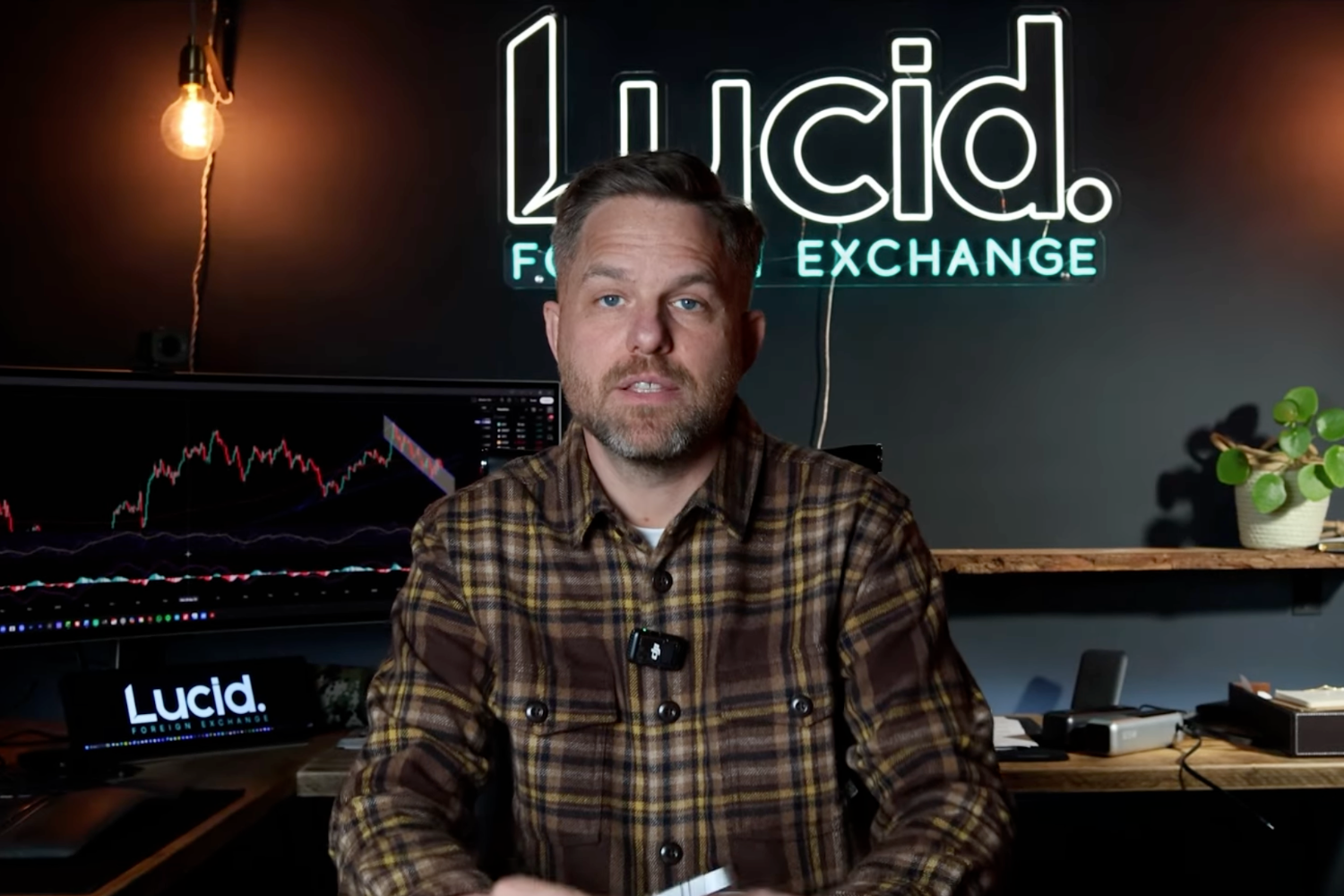
In 16 years of working in FX markets, Lucid founder Dave Huggett can count on one hand the number of times a client has come to him and said, “I want to understand my risk first.”
Almost everyone starts with opportunity. “Where’s the market going? Can we time it better? What if we wait?”
It’s a natural instinct. Everyone wants the upside. But if you start from opportunity, you’re already in the wrong place. And by the time you realise it, the downside has arrived.
In the video below, Dave walks through why FX strategy must always start with risk — not reward — and the practical framework he uses to build currency strategies for clients at Lucid Foreign Exchange.
Watch: FX Risk vs FX Opportunity
In this 13-minute video, Dave covers the opportunity trap, the risk-first framework, how to map known vs contingent exposure, and why the businesses that manage FX well are “boring” — but consistently profitable.
The Opportunity Trap
When you focus on where the market might go, you’re making a prediction. And predictions are guesses — even when they’re informed.
That’s Dave’s starting point, and it’s one that most clients struggle with initially. The temptation to “wait for a better rate” feels rational. But it’s not strategy. It’s speculation.
Here’s why starting from opportunity is dangerous:
- You base your entire approach on something you can’t control: future market direction. You might be right. You might be wrong. Either way, you’ve left your downside unprotected while you wait.
- It puts you in reactive mode. You’re chasing rate movements, second-guessing every decision, and at the mercy of market noise. That’s not a comfortable place to manage a large transfer from.
- Brokers exploit it. As Dave explains in the video, some providers will actively encourage you to focus on opportunity — because it generates trades, urgency, and volume. Their incentive is the transaction, not your outcome.
Dave has seen businesses delay hedging for months because they were convinced the pound would strengthen. It didn’t. One client lost £60,000 in margin in a single quarter. When asked why they waited, they said, “We thought the market would improve.” When asked what their business requirement was, they said, “Protect our margin.”
The requirement didn’t change. The market desire did. And they paid for it.
The Risk-First Framework
Risk-first means answering one question before you think about rates, timing, or market direction: what does your business — or your personal situation — actually need?
Not want. Need.
In the video, Dave uses a clear example. A UK manufacturer importing $500,000 of components quarterly with a 15% margin. If GBP/USD drops from 1.25 to 1.20, the cost in pounds increases by 4% — wiping out a quarter of the margin.
That’s risk. Defined. Quantifiable. And it exists whether you hedge or not.
The same logic applies to private clients. If you’re buying a €500,000 property in Spain and the rate drops 5% during the 4-month purchase timeline, your house just cost you an extra £21,000. That risk exists from the moment your offer is accepted. The question isn’t whether the market will move. It’s whether you can afford the move if it does.
Known Exposure vs Contingent Exposure: Why the Distinction Matters
One of the most practical takeaways from Dave’s video is the distinction between known and contingent exposure — and why most people hedge them wrong.
| Known Exposure | Contingent Exposure | |
| What it is | Confirmed and contracted. You know the amount, the currency, and the payment date. | Probable but not certain. Deals in negotiation, forecast revenue, expected sales. |
| Examples | Property completion payment, confirmed supplier invoice, scheduled trust distribution, agreed estate settlement | A property offer you haven’t signed yet, expected rental income, a business deal in negotiation |
| How to hedge | Hedge tightly. Forward contracts with defined delivery dates. Lock in and move on. | Hedge partially (30–50%). Keep flexibility to adjust if the deal changes or the forecast shifts. |
| Common mistake | Under-hedging known exposure because you’re hoping for a better rate. | Over-hedging contingent exposure and getting locked into forwards you can’t use. |
The mistake Dave sees constantly: businesses and individuals treating all exposure the same. They either hedge everything — and risk being locked into forwards they can’t use if circumstances change — or they hedge nothing, leaving themselves fully exposed.
Both create risk. The answer is almost always somewhere in between, tailored to your specific situation.
Separate What You Need from What You Want the Market to Do
This is perhaps the most important principle in the entire video, and the one that distinguishes a well-managed FX strategy from speculation.
Your business — or your personal financial plan — has requirements. Budget certainty. Cashflow predictability. The confidence that your property, relocation, or estate settlement won’t be derailed by a currency swing.
Those requirements don’t change based on where you think the market’s going.
But Dave sees it constantly: people abandon their hedging strategy because they “feel” the market’s about to move in their favour. At that point, they’re no longer managing risk. They’re speculating.
Speculation might work once or twice. Over time, it’s expensive. The discipline is separating what your situation needs from what you want the market to do — and always acting on the need, not the hope.
FX Isn’t About Maximising Gain — It’s About Minimising Regret
This is the line from Dave’s video that stays with most people.
If you hedge and the market moves in your favour, you’ve “lost” the opportunity cost. But your budget is intact, your cashflow is predictable, and your transaction is secure. You can live with that.
If you don’t hedge and the market moves against you, you’ve lost real money. Real margin. Real purchasing power. Potentially real deals.
Which would you rather live with?
The question Dave always asks clients is: what’s the worst-case scenario? What happens if the rate drops 10% and you’re not hedged?
- If the answer is “we’d be fine,” then maybe you don’t need to hedge aggressively.
- If the answer is “we’d be in serious trouble,” then the decision is already made.
Risk-first thinking is about defining that line clearly. Once you know where it is, the strategy becomes obvious.
Dave’s Five-Step Framework: From Risk to Strategy
Here’s the practical framework Dave walks through in the video, applied to any large international transfer:
| Step | Action | What This Means in Practice |
| 1 | Map your exposure | List every known and contingent currency requirement. Known: confirmed contracts, invoices, property payments. Contingent: deals in negotiation, forecast sales, expected revenue. |
| 2 | Define your risk tolerance | Ask: what happens if the rate moves 5–10% against me? If the answer is “serious trouble,” the decision is already made. |
| 3 | Protect the downside first | Hedge known exposure where the impact matters. Forward contracts for confirmed payment dates. Lock in and move on. |
| 4 | Layer in flexibility | Contingent exposure needs room to adjust. Hedge 30–50% to protect the downside, but keep the ability to change course if the deal shifts. |
| 5 | Only then think about opportunity | If the downside is protected and there’s room to benefit from favourable moves, capture it. Market orders. Flexible tranches. But this is a bonus, never the starting point. |
As Dave puts it: the businesses and individuals that manage FX well are boring. They’re predictable. They don’t chase perfect rates. They protect outcomes. And over time, that discipline compounds.
For more on how forward contracts work as part of this framework, see our forward contracts page.
Who Does This Apply To?
Dave’s video is framed for corporate businesses, but the principles are universal. Risk-first thinking applies equally whether you’re:
- A CFO managing supplier payments in foreign currency — where margin erosion from unhedged exposure directly hits your P&L
- A private client buying property abroad — where a 3–5% rate swing between offer and completion could cost you £15,000–£25,000 on a £500k purchase
- An executor managing an international estate — where probate delays of 6–12 months create extended currency exposure you can’t control
- A wealth manager advising HNW clients — where protecting client wealth across currencies is part of your fiduciary duty
The scale and context differ, but the framework is the same: map the exposure, define the downside, protect it, then think about opportunity.
For corporate-specific guidance, see our corporate FX page. For private clients, see our private FX service. For wealth managers and advisers, see our wealth management partnership.
Frequently Asked Questions
Isn’t some speculation inevitable in FX?
There’s a difference between structured flexibility and speculation. Leaving 10–20% of your transfer unhedged to capture potential upside — after protecting the bulk — is structured. Leaving everything unhedged because you think the rate will improve is speculation. The distinction is whether you’ve protected your downside first.
What if I hedge and the rate improves significantly?
You’ll have paid a known, budgeted cost instead of a better one. That’s the trade-off for certainty. As Dave says: it’s opportunity cost, not actual loss. Your purchase still went ahead at the rate you planned. The businesses and individuals who consistently try to time the market for the perfect rate end up paying more, on average, than those who hedge early and move on.
Does Lucid use this framework with every client?
Yes. Every client conversation at Lucid starts with understanding the requirement and mapping the exposure — not quoting a rate. The rate comes after the strategy is defined, not before.
Where can I watch more of Dave’s videos?
Dave publishes regular videos on the Lucid Foreign Exchange YouTube channel covering FX market structure, provider models, hedging mistakes, and strategy frameworks. Subscribe for weekly updates.
Ready to Start from Risk?
If you’re managing a large international transfer — whether it’s a property purchase, a relocation, an estate settlement, or business payments — and you want a conversation that starts with protecting your downside, speak to Lucid Foreign Exchange.
We’ll map your exposure, define your risk tolerance, and build a strategy tailored to your situation. No predictions, no pressure, no hidden costs.
Get in touch today. Call us, email us, or book a consultation..
Leave a Reply