
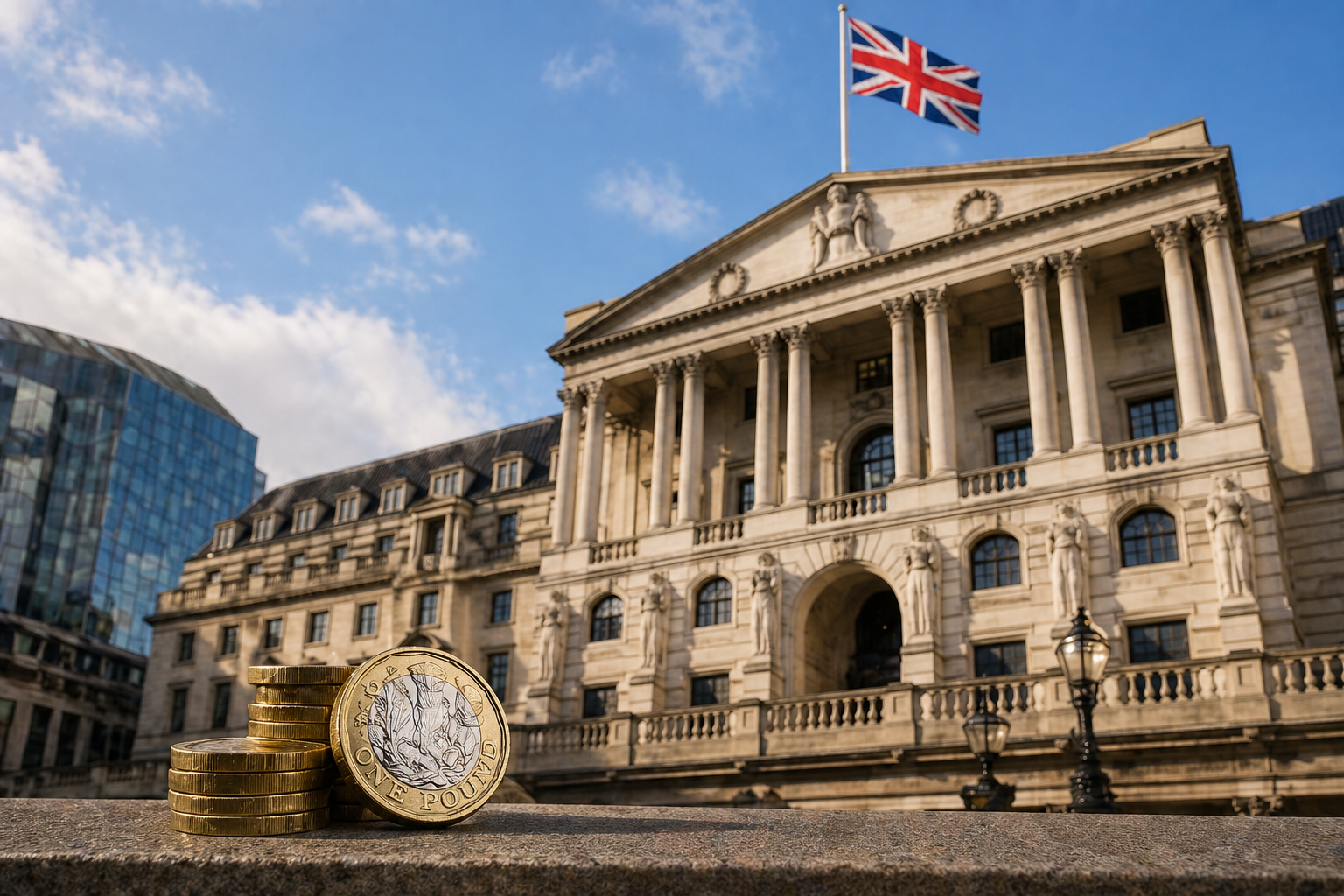
The Bank of England’s Monetary Policy Committee has voted 8–1 to hold Bank Rate at 3.75%, with one member voting to raise rates to 4.00%. It’s the third consecutive hold since the BoE paused its cutting cycle — and the first time since 2023 that an MPC member has voted for a hike.
That single dissenting vote for a rate increase is the headline. It tells us that the MPC is no longer just debating how fast to cut — it’s now actively debating whether to raise rates. For anyone holding pounds or planning a large international transfer, this is a meaningful shift in the outlook.
What the MPC Decided — and Why It Matters
The MPC voted by a majority of 8–1 to maintain Bank Rate at 3.75%. One member voted to increase the rate by 0.25 percentage points to 4.00%.
In the accompanying statement, the Committee acknowledged that the conflict in the Middle East has created “highly uncertain” prospects for global energy prices. The BoE stated: “Monetary policy cannot influence energy prices but will be set to ensure that the economic adjustment to them occurs in a way that achieves the 2% inflation target sustainably.”
Governor Andrew Bailey framed the current shock as different from the 2022 energy crisis — noting that the energy price increase has been smaller so far, monetary policy started from a more restrictive position, and the labour market is weaker. He described the appropriate policy response as “state-contingent”: if the shock appears short-lived or the economy weakens, the BoE would prioritise avoiding unnecessary contraction in activity.
The April Monetary Policy Report, published alongside the decision, sets out three scenarios for the UK economy — reflecting the wide range of possible outcomes depending on how the Middle East conflict evolves.
Read the full MPC minutes on the Bank of England website.
How the Markets Reacted
- GBP/USD rose 0.4% to $1.3473 following the announcement. The hold was expected, but the hawkish dissent supported the pound.
- UK gilt yields fell, with the benchmark 10-year yield dropping 6 basis points to 5.014%. This suggests the market sees the BoE as cautious rather than actively hawkish.
- GBP/EUR held steady around 1.15, reflecting the fact that both the BoE and ECB are in wait-and-see mode. The interest rate gap remains at 1.75 percentage points in favour of the UK.
The overall read: the market expected a hold and got one. The hawkish dissent keeps rate hike expectations alive but doesn’t accelerate them. The BoE is signalling patience, not urgency.
What This Means for the Pound
1. Rate cuts are off the table for now
In February, the MPC voted 5–4 to hold — meaning four members wanted to cut. In March, the hold was unanimous. Now in April, one member has voted to hike. The direction of travel is clear: the BoE is moving further from cuts, not closer to them. This supports GBP in the near term.
2. A rate hike is now a live possibility
One vote doesn’t make a majority, but it makes a hike a credible scenario for future meetings. If UK inflation continues rising — CPI was 3.3% in March and the BoE expects it to go higher — more members could join the dissent. Markets are pricing roughly a 30–40% probability of a hike by year-end.
3. The Middle East conflict is the swing factor
The BoE’s statement made clear that the policy response depends on how the conflict evolves. If tensions de-escalate and oil prices fall, inflation would ease, the case for hikes would disappear, and GBP could weaken. If the conflict deepens and oil stays above $100, inflation stays elevated, hike expectations build, and GBP stays supported.
What This Means If You’re Planning a Large Transfer
If you’ve already locked in a forward contract
Today’s decision doesn’t affect you. Your rate is fixed, your budget is set, and the MPC’s deliberations are background noise. This is the benefit of hedging: when the news breaks, you don’t need to react.
If you haven’t hedged yet
GBP/EUR is around 1.15 and GBP/USD is around $1.35 — both near or slightly above the 2026 average. These are reasonable levels by recent standards.
But the outlook between now and the next meeting on 18 June is unusually uncertain. You’ll have UK inflation data, a Fed decision, an ECB decision, and the ongoing Middle East situation — any of which could move GBP by 2–3% in either direction.
If you have a transfer to make in the coming weeks or months, the post-decision rate may be the clearest window you get. The BoE has given you its assessment; the market has priced in its response. Between now and June, the picture only gets murkier.
As Lucid founder Dave Huggett explains in his video on FX risk vs opportunity: if a 5% rate drop would cause you real problems, the decision to hedge is already made. Don’t wait for certainty that isn’t coming.
What Happens Next?
The next MPC meeting is on 18 June 2026. Between now and then:
- Mid-May: UK CPI data (April figures). If inflation rises toward 3.5–4%, rate hike expectations will intensify.
- 6–7 May: US Federal Reserve decision. If the Fed signals easing while the BoE signals tightening, GBP/USD could push higher.
- Ongoing: Middle East developments. Any de-escalation would ease energy prices and potentially shift the BoE back toward a cutting bias.
For the full picture on GBP/EUR, see our April 2026 GBP/EUR outlook. We’ll publish the May update shortly.
How to Protect Your Transfer After Today’s Decision
Lock in a forward contract
If today’s rate works for your budget, lock it in for up to 12 months. Learn more on our forward contracts page.
Set a market order
If you think GBP could strengthen further, set a target rate with your dealer. If the market hits it, your transfer executes automatically.
Talk to your dealer
BoE decisions are exactly the moments when having a dedicated dealer matters. They understand the vote split, the three-scenario framework in the MPR, and can advise based on your specific timeline.
Frequently Asked Questions
Why did the BoE hold when inflation is rising?
The BoE sees the inflation spike as driven by external energy prices, not domestic demand. Hiking prematurely could slow the economy without addressing the root cause. The Committee is waiting to see how the energy shock propagates before acting.
What does the 8–1 vote split mean?
One member believes inflation risk is serious enough to hike now. While it’s a minority, it shifts the debate. In February, the dissent was toward cutting. In April, the dissent is toward hiking. That’s a significant directional shift in just two months.
Should I wait for the June meeting?
Waiting is itself a risk. A forward contract lets you lock in today’s rate while keeping a portion flexible for potential upside. Talk to your dealer about the right blend for your timeline.
When is the next BoE meeting?
18 June 2026. We’ll publish another analysis article immediately after that decision.
Need Guidance After Today’s Decision?
The BoE has held rates, but the outlook has shifted. If you’re planning a large international transfer, speak to Lucid Foreign Exchange. We’ll show you the post-decision rate, explain your options, and help you decide whether to lock in or wait.
Get a free, no-obligation rate quote. Call us, email us, or book a consultation.
Leave a Reply