

Why Ownership Structure Matters
For many UK investors, buying abroad feels like a lifestyle choice — but the legal structure you choose defines how that asset behaves for decades.
The difference between holding property personally, through a company, or within a trust can affect:
- Tax efficiency (both UK and foreign)
- Succession and inheritance planning
- Privacy and control
- Access to finance
- Exposure to double-tax agreements
At Lucid Financial Markets, we help clients model these factors early — before contracts are signed — so ownership complements their wider wealth strategy.
Option 1: Personal Ownership
✅ Advantages
- Simple to set up — purchase in your own name.
- Qualifies for certain reliefs (e.g. personal capital-gains exemptions in some EU countries).
- Straightforward financing and insurance.
⚠️ Drawbacks
- Full personal exposure to foreign tax and reporting.
- Potential double taxation on rental income or capital gains.
- Inheritance may trigger probate or cross-border legal delays.
Best for: Lifestyle buyers or single properties with limited rental activity.
Option 2: Company Ownership
✅ Advantages
- Corporate veil separates personal and property liabilities.
- May simplify joint ownership between family members.
- Easier to transfer shares than the property itself — efficient for succession.
- Potentially favourable treatment for business-use properties or portfolios.
⚠️ Drawbacks
- Ongoing compliance costs and foreign corporate tax filings.
- Some countries impose higher property taxes on corporate entities.
- Gains may face both local corporation tax and UK tax on dividends.
Best for: Investors with multiple overseas assets or those seeking long-term income generation.
Option 3: Trust Ownership
✅ Advantages
- Provides privacy and continuity — property held by trustees on behalf of beneficiaries.
- Useful for succession and estate planning across generations.
- Can integrate with broader wealth or family-office structures.
⚠️ Drawbacks
- Complex legal setup; requires professional administration.
- Some jurisdictions impose additional registration or disclosure requirements.
- Potential double taxation if not properly coordinated between UK and local law.
Best for: Families prioritising legacy and asset protection over short-term efficiency.
Cross-Border Coordination — The Lucid Framework
Effective structuring isn’t just a legal choice;
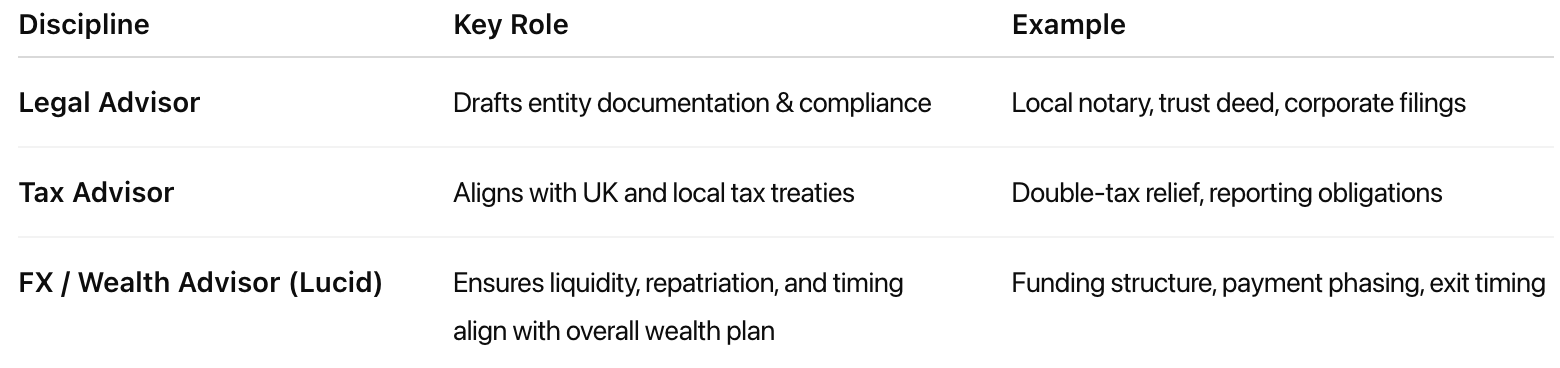
Lucid coordinates these moving parts so ownership, financing, and currency strategy operate seamlessly.
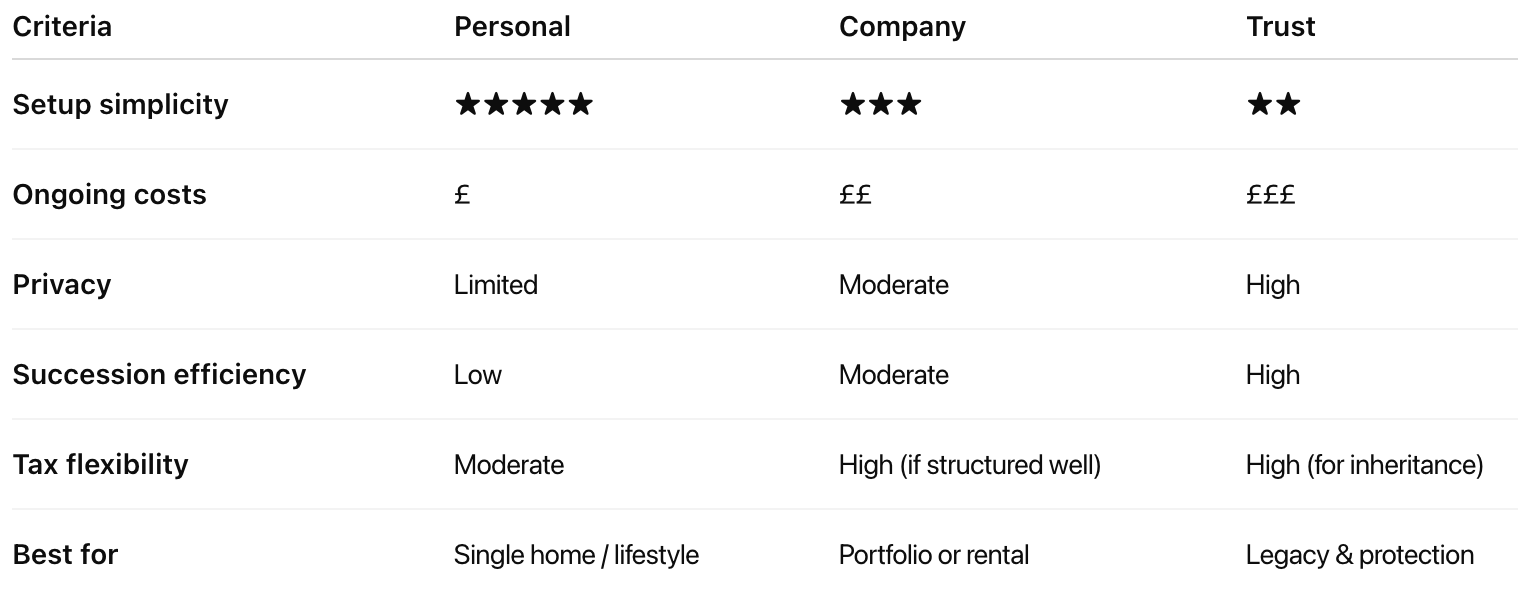
Comparative Overview
Lucid Insight
Ownership structure should never be an afterthought.
By assessing your tax position, intended use, and long-term objectives, Lucid helps you determine the optimal framework — not just for the property, but for your wealth ecosystem.
Key Takeaways
- Structure drives both tax outcomes and family continuity.
- Personal ownership is simplest; trusts and companies bring flexibility but complexity.
- Always integrate legal, tax, and FX planning — they operate together.
- Review structure annually as tax treaties evolve.
If you’re considering a property purchase abroad, speak with a Lucid Advisor before finalising your ownership structure.
We’ll coordinate with your legal and tax partners to ensure your property fits neatly within your long-term financial strategy.